Your First Reformer Pilates Class
A first reformer Pilates class can feel daunting when you've never seen the machine up close. The good news: almost everyone who walks through our door has felt the same way — and almost everyone leaves wanting to come back.
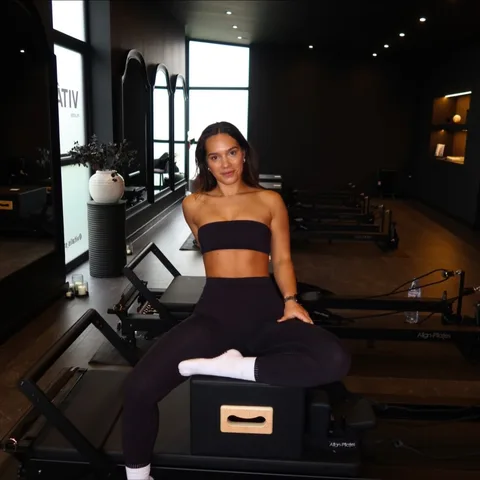
This is what to expect at Vitális Studios in Newport, from nerves to soreness. Written by Nadia, Level 3 and Level 4 qualified in both mat and reformer Pilates.
Should I be nervous?
Mild nerves are completely normal. You're stepping into new equipment you've probably never used, trying movements your body hasn't done before, and doing it in front of an instructor and a handful of other people. A bit of "what have I signed up for" is expected.
Here's what usually settles it: the reformer is forgiving. The springs take load for you when you need them to. Your instructor stays close — adjusting your springs, correcting your form, and cueing modifications.
Do I need to be fit?
No. Flexibility and fitness are what reformer Pilates builds — they're not prerequisites. Complete beginners, older adults, post-natal mums, and clients recovering from injury all train on the reformer at Vitális every week.
The reformer adjusts to you. Lighter springs make exercises easier; heavier springs make them harder. Your instructor sets the right tension before each exercise, and will cue a modification (or a progression) on the fly if you need one. If you can lie down, sit up, and move your limbs through a normal range, you can do a class.
If you're pregnant, post-surgical, or managing a specific injury, email info@vitalis-studios.com before booking and we'll talk you through what's suitable — including whether a private 1:1 session might be a better starting point.
What to wear
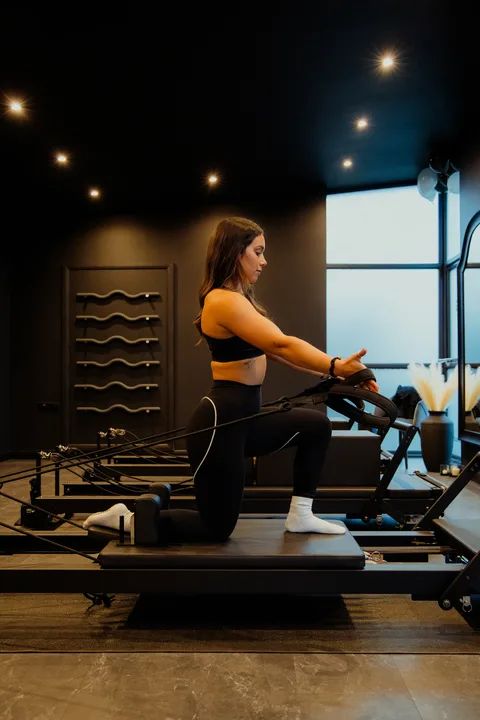
Form-fitting workout clothes: leggings or shorts, and a top that stays put when you reach overhead or lie back. Loose layers can ride up or catch on the springs.
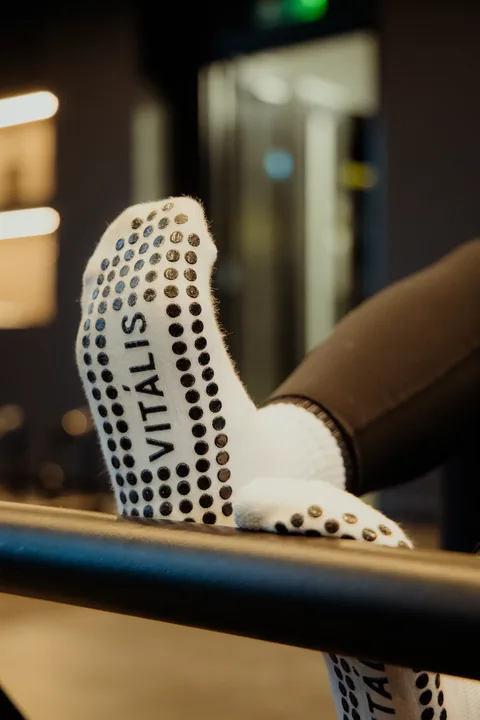
Grip socks are required for safety and hygiene — the carriage has a vinyl surface and ordinary socks slip. We sell grip socks at the studio if you don't already own a pair. We cover this (and a few other small details) in our full what-to-wear guide.
A few small things that save hassle: tie long hair back, leave big jewellery at home, and bring a bottle of water.
What happens when you arrive
Arrive 5 minutes before your first class. The studio is inside Alpha Athletic on Broadway, with free parking at the building. Come straight through to Vitális — no Alpha membership or gym check-in is needed. If it's your first time, just say hello at reception — you'll often find Nadia there to welcome you in.
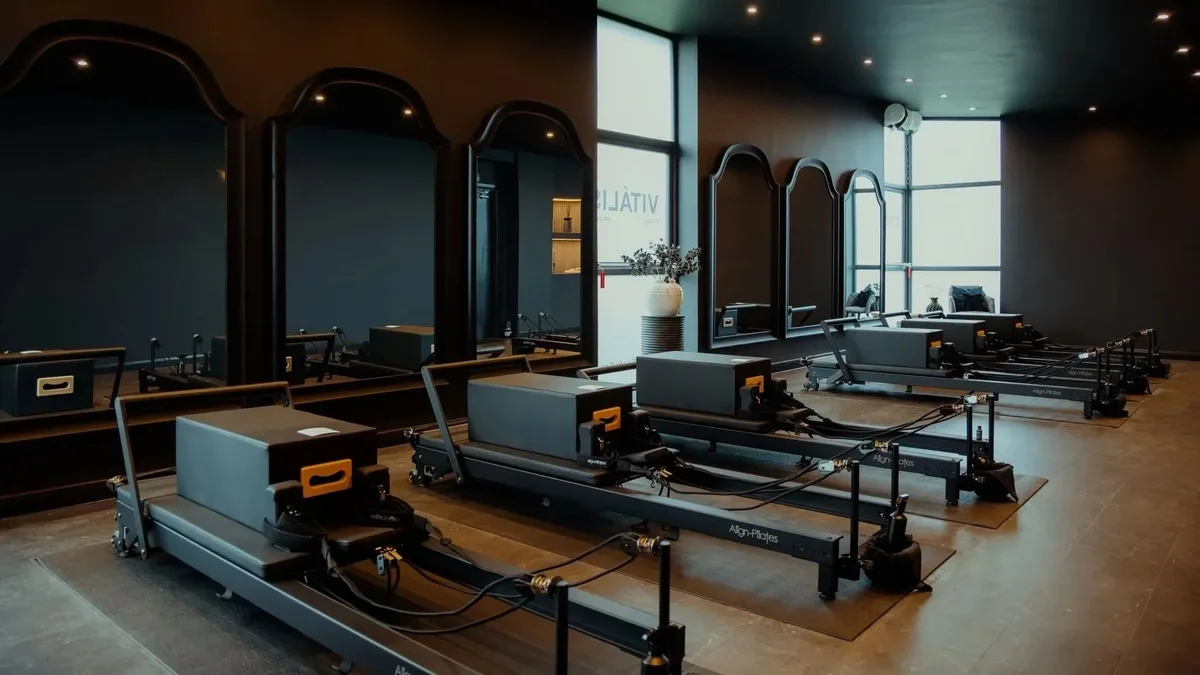
Your instructor will meet you, show you where to leave your shoes and bag, and take you to a reformer. Before class starts, you'll get a short orientation:
- How the reformer works — carriage, footbar, straps, and springs
- How spring resistance actually feels (lighter or heavier doesn't always mean easier or harder — it depends on the exercise)
- How to adjust the headrest, foot straps, and gear bar between exercises
- Where the restroom is, and where to find water
You don't need to memorise any of it. Your instructor will cue every spring change and equipment adjustment as you go.
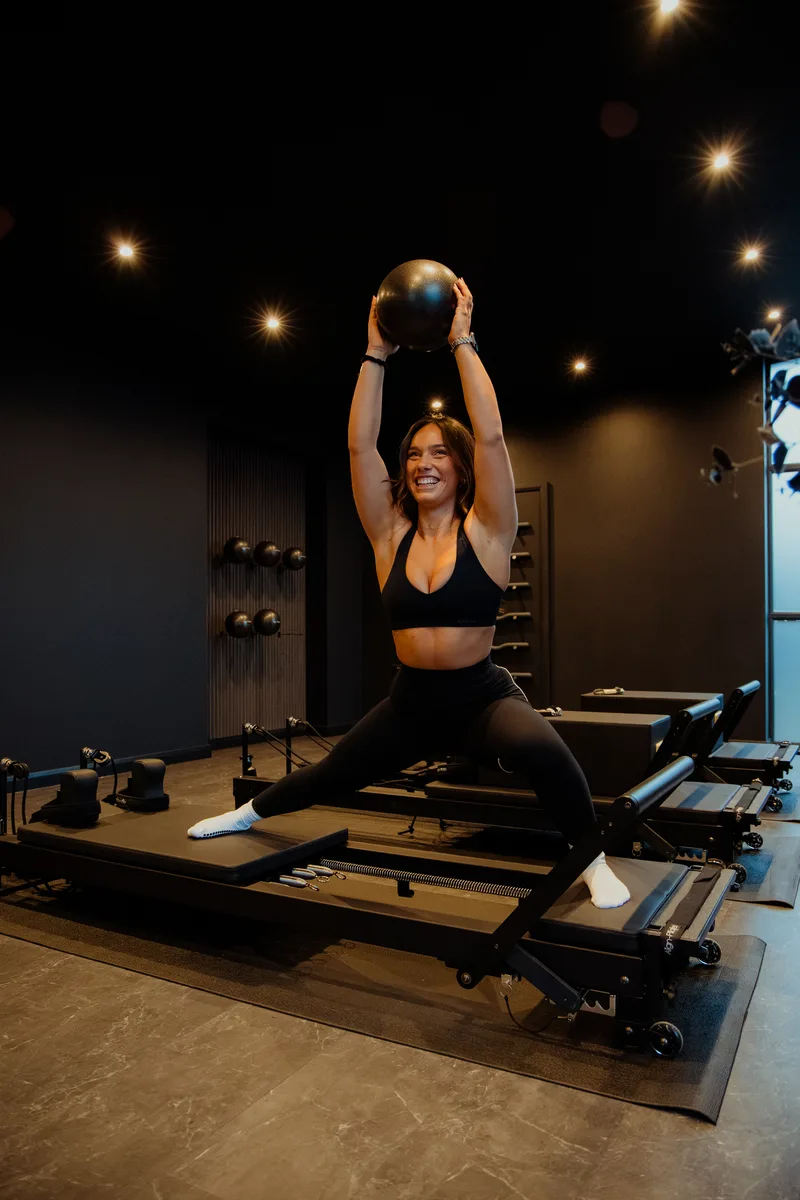
Nerves on your first class are normal — I still remember mine. Fifteen minutes in, once you've found your feet on the footbar, it clicks. Most people are already thinking about when to come back before the cooldown.
A Note from Nadia
What the class is like
Every Vitális class runs 50 minutes and follows the same broad arc, though the exact exercises change session to session. Here's roughly what your first class will feel like:
- Breathwork and mobility (~5 minutes). Lying on the carriage to warm up the spine and connect breath to movement.
- Footwork (~10 minutes). The foundational reformer exercise — feet on the footbar, pressing the carriage out and back. Builds strength in quads, glutes, and calves while waking up the deep core.
- Full-body strength work (~25 minutes). Upper body with straps, core sequences, leg and glute work. Your instructor changes springs and cues modifications before each exercise.
- Stretching and cooldown (~10 minutes). Lengthen the muscles you've just loaded and come back to your breath before leaving the studio.
You'll feel your core working within the first five minutes — the moving carriage forces it to stabilise whether you're focused on it or not. By the end of the class, most first-timers describe a "worked through" feeling rather than exhaustion. It's demanding, but rarely overwhelming.
Will I be sore afterwards?
Probably — in the best way. Common spots: the deep core, inner thighs, upper back, and the sides of the glutes. Soreness usually peaks 24–48 hours after class and resolves by 72 hours.
This isn't heavy-weights soreness. Most clients describe it as pleasant — a sign you've loaded muscles that don't normally get used. Drink water, move gently the next day, and it'll settle.
If you're very sore after a first class, don't wait a fortnight to come back. The body adapts fast on the reformer, and the second class is almost always easier than the first. Two sessions a week is the sweet spot for most clients — enough to feel steady progress without overloading.
FAQs
How far in advance should I book my first reformer Pilates class?
A week is usually plenty — our most popular times (early morning and 6pm) can fill up faster, so booking a few days ahead is safer. You can book and pay online through Momence in under two minutes; there's no membership or commitment beyond the class you book. See classes and pricing or try our 2-class intro offer at £30.
Can I come on my own or do I need to bring a friend?
Most of our clients started solo. Classes are 6 people maximum, so it's a calm, welcoming room — nobody is watching you, and your instructor is next to your reformer for most of the class. If you'd rather bring a friend, that's great too, but it's not needed.
What if I can't keep up in my first reformer Pilates class?
You won't have to. Every exercise has modifications — your instructor will cue an easier version or lower the spring resistance for you if needed. You can also pause at any time. Nobody expects a first-timer to move at the pace of a regular.
Do I need to be flexible or fit to start reformer Pilates?
No. Flexibility and fitness are what reformer Pilates builds, not prerequisites. If you can lie down, sit up, and move your limbs through a normal range of motion, you can do a class. Complete beginners, older adults, post-natal mums, and clients recovering from injury all train on the reformer at Vitális.
How often should I come after my first reformer Pilates class?
Aim for one to three classes a week. Twice a week is the sweet spot for most clients — enough to feel steady progress without overloading the body. If you're very sore after a first class, come back sooner rather than later; the body adapts quickly and the second class is almost always easier.
Published 21 November 2025 · Updated 18 April 2026